Pest Control Services
Honey Bee Concerns Pest Control Services
Friendly, effective honey bee concerns pest control for Visalia homes and businesses.
Honey bee colonies in walls and attics are different from wasps — we diagnose, advise, and connect you to the right resource.
About bees in the Central Valley
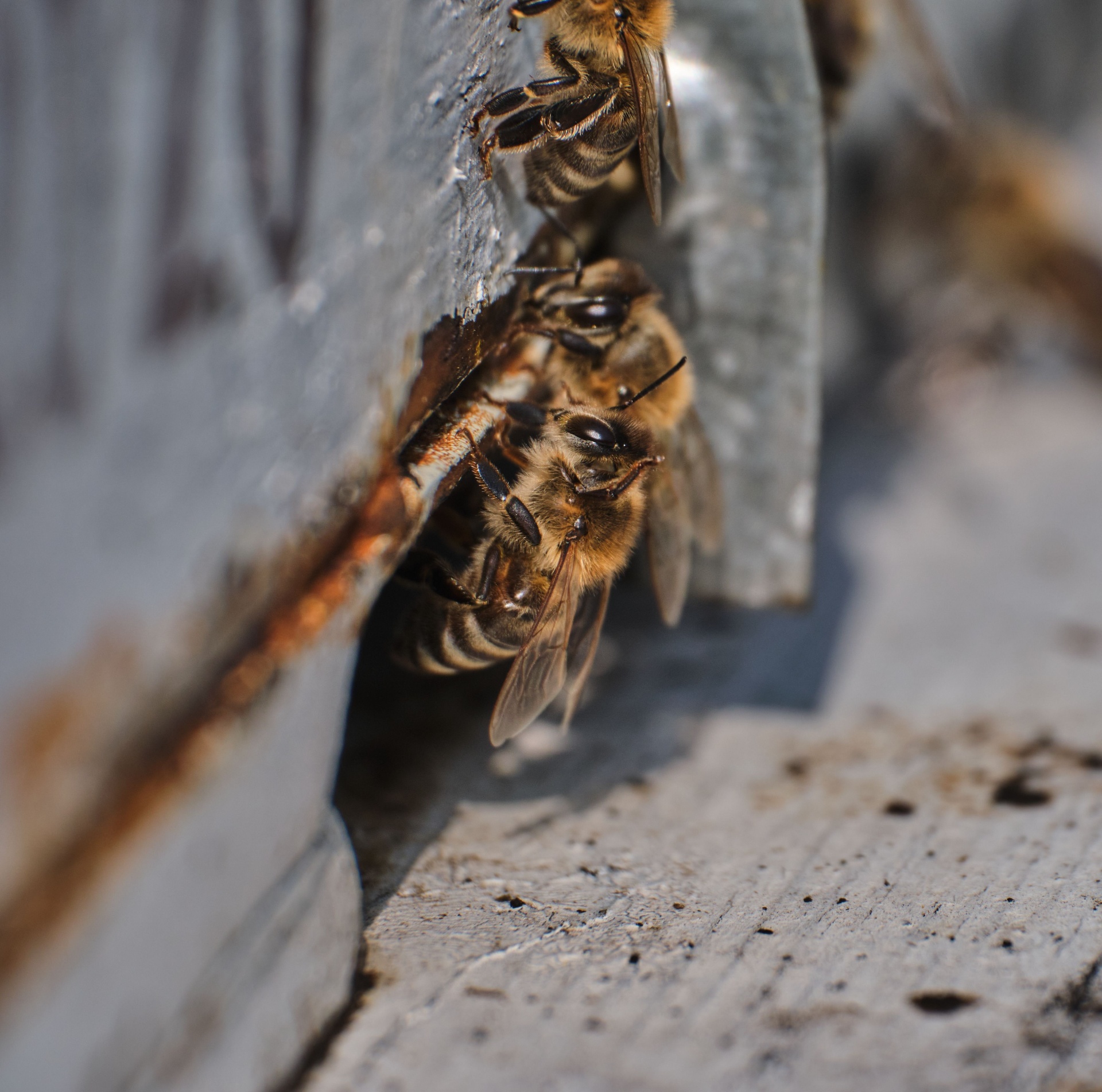
Honey bees are pollinators we want to protect when possible — they're not wasps, and they shouldn't be sprayed at the first sign of activity. Most of the 'bees' homeowners worry about are actually paper wasps or yellow jackets (covered on our wasp & hornet page). When real honey bees move into a wall void, soffit, or attic, the right response depends on where they are, how long they've been there, and whether the colony can be safely relocated.
Why it's a problem
An established honey bee colony in a wall void can produce 50+ pounds of honeycomb. If the colony dies and isn't removed, the wax melts and the honey attracts ants, roaches, and rodents — often causing more damage than the bees themselves.
What homeowners can try first
Real tactics that can help with light pressure — and the honest limits of each.
- If you see a swarm clustered outside on a branch, wait 1-3 days — most move on naturally.Limit: Works only for temporary swarms, not established colonies inside structures.
- Do not spray honey bees with over-the-counter wasp products.Limit: Illegal in some cases, harms pollinators, and leaves dead bees and rotting comb inside the wall.
- Mark the active entry point and take a clear photo for identification.Limit: Important diagnostic step, not a solution.
- Confirm it's actually honey bees, not yellow jackets or paper wasps.Limit: Easy to misidentify. Honey bees are fuzzy, golden-brown; yellow jackets are smooth and bright yellow.
When to call Invictus
DIY is a first step. These are the moments to pick up the phone.
- Bees entering and exiting a wall, soffit, or attic gap
- Honey or wax stains showing through interior drywall
- Abandoned bee location now attracting ants, wasps, or rodents
- You're not sure if it's bees or wasps
The professional process for bees
Every pest has a different biology — and a different process. Here's how we handle bees specifically.
- 01
Identification visit
We confirm whether you have honey bees, paper wasps, or yellow jackets — and where the colony actually lives.
- 02
Recommendation
For honey bees in a structure, we recommend live removal where possible and connect you with a trusted beekeeper or live-removal specialist.
- 03
Wasp & hornet treatment when applicable
If it turns out to be wasps or hornets, we treat directly (see our wasp & hornet page).
- 04
Follow-up pest control
After live removal, we treat the secondary pests (ants, roaches) that show up when comb and honey are left behind.
Treatment methods — and what Invictus actually offers
Pest control companies use a wide range of methods, and not every company offers every one. Here's exactly what's standard in the industry, and where Invictus fits in.
- Invictus offers this
Identification & advice
Free phone or on-site ID to confirm whether it's bees, wasps, or hornets.
- Invictus offers this
Wasp & hornet treatment (when it's not actually bees)
Direct treatment when the colony turns out to be paper wasps or yellow jackets.
- Invictus offers this
Follow-up secondary-pest treatment
Treatment for the ants, roaches, and scavengers that move in after a colony dies.
- We refer to a specialist
Live honey bee removal / relocation
Cut-out, vacuum removal, and relocation of a live honey bee colony.
We refer live honey bee removal to a local beekeeper or live-removal specialist. We don't spray active honey bee colonies.
Why Central Valley families and businesses choose Invictus
SPCB-licensed & insured
California Structural Pest Control Board licensed. Trained, professional technicians on every visit.
Integrated Pest Management (IPM)
Targeted treatments where they matter, exclusion and monitoring everywhere else — not blanket spraying.
A real person answers the phone
No call centers, no chatbots. You talk to the same local team every time.
Honest, flat-rate pricing
Transparent residential pricing and right-sized commercial programs. No surprise add-ons.
Pet- and family-conscious
Low-impact products, placed where they're needed — not where your kids and pets live.
Locally owned in the Central Valley
Based in Visalia, serving Fresno, Madera, and Clovis. We live where we work.
Free re-treats between visits
If pests come back between scheduled visits, so do we — at no extra charge.
No long-term contracts
Month-to-month service. You stay because it works, not because of fine print.
Other pests we treat
One call covers your whole property. Click any pest below for the full service page.
Argentine ants, odorous house ants, and pavement ants are a year-round nuisance across the Central Valley.
Ants pest control →Black widows are one of the most common venomous spider concerns in Central Valley garages, block walls, and woodpiles.
Spiders pest control →German and American cockroaches spread fast in Central Valley kitchens, restaurants, and apartments.
Cockroaches pest control →Bed bugs hitchhike on luggage and used furniture, then hide in mattress seams, headboards, and baseboards.
Bed Bugs pest control →Fleas come in on pets and wildlife and quickly infest carpets, pet bedding, and yard areas.
Fleas pest control →Ticks pick up rides on pets, wildlife, and people, and can transmit Lyme and other tick-borne diseases.
Ticks pest control →Roof rats and Norway rats damage homes, contaminate food, and reproduce year-round in the Central Valley.
Rats pest control →House mice slip through gaps the size of a dime and quickly establish in pantries, garages, and walls.
Mice pest control →Pocket gophers destroy lawns, irrigation, and landscaping across the Central Valley.
Gophers pest control →Paper wasps, yellow jackets, and mud daubers build nests in eaves, attics, and block walls each summer.
Wasps & Hornets pest control →Take care of your bees problem — for good.
Call 559-712-1615 or request a free quote. Locally owned and serving Visalia, Fresno, Madera, and Clovis.